-
04-23 2026
Liaoning Qiushi Shines at the 20th Grain & Oil Food Industry Expo, Showcasing Cutting-Edge Grain Storage and Drying Solutions
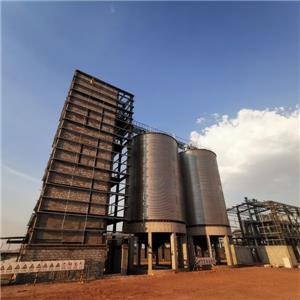
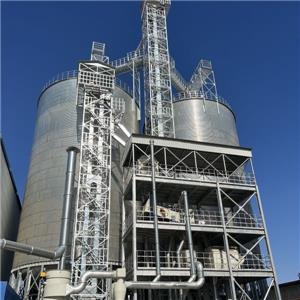
As a professional enterprise focusing on the design, manufacturing, installation, and after-sales service of grain storage equipment, Liaoning Qiushi has always been committed to solving the core pain points of the grain and oil industry, such as high post-harvest losses, low storage efficiency, and complex environmental control. At the 20th Grain & Oil Food Industry Expo, we brought our star products tailored to the current market needs, including high-performance flat-bottomed steel silos, intelligent mechanical ventilation systems, and energy-efficient industrial drying towers, and demonstrated the complete process solutions for grain storage, ventilation, and drying through detailed technical displays and on-site consultations.
-
04-13 2026
Liaoning Qiushi Shares Key Usage Precautions for Grain Lipp Silo
In the global grain storage and handling industry, grain lipp silo systems have gained widespread popularity due to their efficient material handling performance, low maintenance costs, and excellent structural stability. As a professional enterprise specializing in the design, manufacture, installation and after-sales service of grain lipp silo, Liaoning Qiushi Vertical Silo Equipment Engineering Co., Ltd. has long been committed to providing high-quality, reliable grain lipp silo solutions for global customers. Beyond supplying advanced equipment, we also focus on guiding customers to use the equipment scientifically and safely, ensuring that each grain lipp silo maintains optimal operational performance throughout its service life. Today, we share key usage precautions for grain lipp silo, helping customers maximize equipment value and achieve safe, efficient grain storage.
-
04-10 2026
The Importance of Grain Silo Ventilation and Fumigation: Safeguarding Grain Quality with Professional Solutions from Liaoning Qiushi
The Importance of Grain Silo Ventilation and Fumigation: Safeguarding Grain Quality with Professional Solutions from Liaoning Qiushi
-
04-07 2026
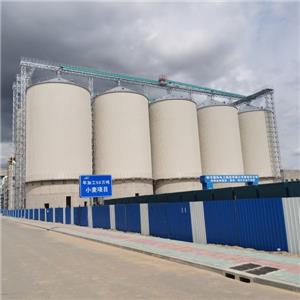
Wheat Storage Steel Silo Project Helping Local Food Security Upgrade
We are delighted to announce the successful commissioning and handover of the 1,000-ton wheat storage steel silo project in Thailand. Located in a key agricultural and logistics hub of Thailand, this project is tailor-made to address the local demand for modern, efficient, and safe wheat storage, marking our important step in deepening the Southeast Asian grain storage market and demonstrating our professional strength in the global steel silo and grain industry.
-
04-03 2026
Global Steel Silo and Grain Industry Market Thrives: Intelligence, Sustainability and Infrastructure Upgrade Drive Growth
Technological innovation has become the backbone of the steel silo and grain industry’s development, with intelligence and automation leading the transformation. Traditional steel silos and grain handling systems are being rapidly upgraded with advanced technologies such as the Internet of Things (IoT), artificial intelligence (AI), and smart monitoring systems. For instance, leading manufacturers are equipping steel silos with real-time sensor networks that track temperature, humidity, and grain quality, enabling remote monitoring and predictive maintenance to prevent spoilage and pest infestation. Companies like AG Growth International (AGI) and Bühler AG are integrating digital monitoring platforms and automated handling systems, empowering operators to optimize storage performance and minimize post-harvest losses—a critical priority for the industry globally. Additionally, innovations in steel coating technologies, such as Promag—a composite of aluminum, zinc, and magnesium—have enhanced corrosion resistance by over 10 times compared to traditional galvanized steel, extending silo lifespans and reducing maintenance costs significantly.
-
03-30 2026
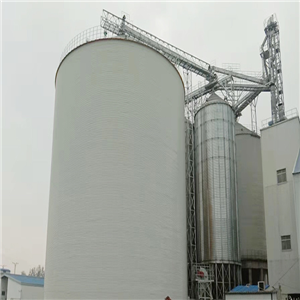
Mechanical Ventilation Standards for Flat-Bottomed Steel Silos
Flat-bottomed steel silos have become a core choice for grain storage, bulk material storage, and industrial warehousing worldwide, thanks to their large storage capacity, space-saving structure, and easy maintenance. However, their unique flat-bottom design and thin-walled metal structure make them highly susceptible to temperature and humidity fluctuations, which can lead to condensation, mold growth, localized overheating, and even material deterioration—directly threatening storage safety and quality. Mechanical ventilation is the most effective way to solve these problems, but unscientific operation can exacerbate risks such as silo wall condensation, material moisture regain, and dust explosions.
-
03-20 2026
How to Choose the Right Grain Loading Process for Steel Silos?
As the core equipment of modern grain storage systems, steel grain silos are widely recognized for their short construction cycle, excellent airtightness, and high mechanization level. Grain loading, as the initial and critical link of grain storage, directly affects grain breakage rate, cleaning efficiency, and the safety of subsequent storage operations. To help grain depots, agricultural enterprises, and storage operators select the most suitable loading solution, Liaoning Qiushi Silo Equipment Engineering Co., Ltd., a professional manufacturer of steel silos and integrated storage solutions, sorts out mainstream grain loading processes, integrates core information, and provides targeted selection guidance based on years of project experience.
-
03-17 2026
New Anti-Corrosion Wear-Resistant Steel Silos, Upgrading Grain Storage Quality and Efficiency
Liaoning Qiushi Silo Equipment Engineering Co., Ltd., a leading enterprise in the global steel silo industry, is pleased to announce the official launch of its new series of anti-corrosion wear-resistant steel silos, designed specifically to address the long-standing challenges of grain storage in harsh environments. This new product launch marks a major breakthrough in the company’s technological innovation, further enhancing its core competitiveness in the grain storage equipment market and providing more reliable, durable, and cost-effective storage solutions for global customers.
-
02-28 2026
Five Basic Procedures for Pressure Testing of Flat‑Bottomed Steel Silos
The pressure test — also referred to as a full‑load test or foundation settlement test — represents the final critical step in the construction of flat‑bottomed steel silos. This test verifies structural strength, overall stability, and foundation bearing capacity, eliminates potential hazards, and ensures the silo system meets design and safety standards before formal operation.
-
02-26 2026
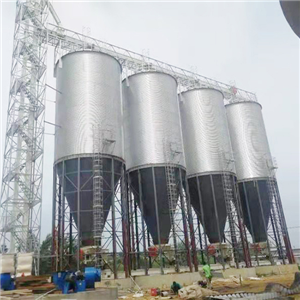
Why the Grain Discharge Mechanism of Hopper Bottom Silos Gets Stuck or Stops
LIAONING, China – Hopper Bottom Silos are widely favored in grain storage for their efficient gravity-driven discharge capability, but the normal operation of their grain discharge mechanism is crucial to ensuring smooth storage workflows. When the grain discharge mechanism of a Hopper Bottom Silo gets stuck or stops, it is far more than a simple operational glitch—it triggers quadruple risks affecting safety, equipment integrity, grain quality, and production continuity, with potentially severe economic losses. Liaoning Qiushi Silo Equipment Engineering Co., Ltd., a leading manufacturer of Hopper Bottom Silos and supporting discharge systems, draws on years of industry experience to analyze the ten main causes of this issue, helping customers identify, prevent, and resolve discharge jams effectively.