
Mechanical Ventilation Standards for Flat-Bottomed Steel Silos
Liaoning Qiushi has long been committed to optimizing the safety and efficiency of silo operations. Through in-depth research on different climate conditions, material characteristics, and silo specifications, we have formulated scientific and operable mechanical ventilation norms that comprehensively cover all key links of ventilation operations, without adopting a fragmented point-by-point structure. These norms provide comprehensive guidance for silo operators, grain depots, and industrial enterprises, ensuring that every link of mechanical ventilation is scientific, standardized, and safe.
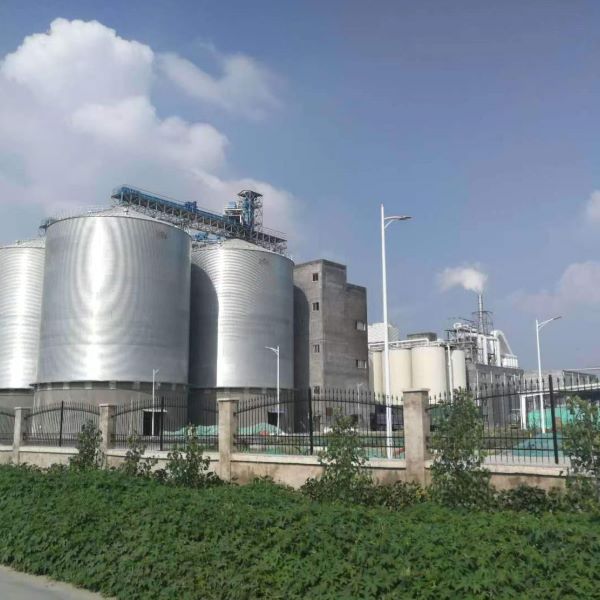
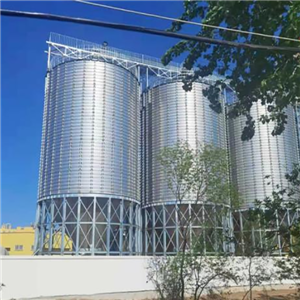
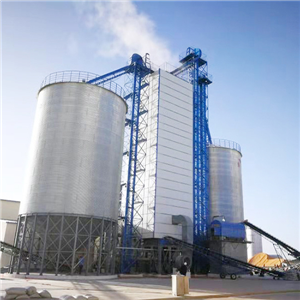
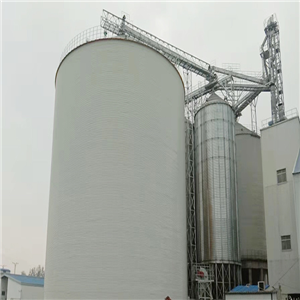
Comprehensive Mechanical Ventilation Standards for Flat-Bottomed Steel Silos by Liaoning Qiushi
The mechanical ventilation standards formulated by Liaoning Qiushi are designed to address the structural characteristics of Flat-Bottomed Steel Silos (such as easy dead corners and temperature sensitivity) and the practical needs of industrial and agricultural storage, with each operational link supported by professional technical parameters and practical operation tips to ensure operability and scientificity. Before initiating mechanical ventilation, a thorough inspection of equipment, silo structure, and stored materials is essential to eliminate potential risks—this is the foundation of safe ventilation and the first key link of the integrated standards. We recommend focusing on four key aspects during the pre-ventilation inspection: for the ventilation system, operators should check that fans rotate in the correct direction, motors have sufficient insulation (meeting the requirement of ≥2Mohm for 380V motors and ≥1Mohm for 220V motors), wiring is intact and grounding is secure (with grounding resistance not exceeding 4ohm), and that fans run smoothly without abnormal noise (kept below 75dB) or excessive vibration (vibration amplitude ≤0.8mm/s) during 10 minutes of idle operation. For ducts and valves, it is critical to clear any debris to ensure unobstructed airflow, with ventilation resistance controlled within 150Pa at rated airflow, and to verify that valves open and close flexibly, seal tightly when closed (with a leakage rate ≤5%), and maintain accurate opening angles (error within ±5%) for uniform airflow distribution. Silo airtightness should be tested using the pressure decay method: after raising the internal pressure to 500Pa, the pressure half-life should be at least 5 minutes (or 40 seconds for fumigation-specific silos) with leakage not exceeding 0.02m³/(m².min). Additionally, stored materials should be inspected to ensure a flat grain surface (slope ≤3°) free of thick crusts (any crust ≥2cm thick must be broken) and large clumps (clumps ≥5cm in diameter should be dispersed) to avoid airflow short-circuiting, while grain temperature, moisture, and impurity content should meet safety standards to prevent duct blockages.
During the ventilation process, continuous real-time dynamic monitoring is crucial to ensure ventilation effectiveness and safety. Liaoning Qiushi recommends regular monitoring of five key parameters with clear safety thresholds and handling measures: motor and fan parameters should be checked every 30 minutes, including current (maintained between 60% and 95% of the rated current; if it exceeds 110% for more than 10 seconds or suddenly increases by more than 15% without damper adjustment, the machine should be stopped immediately to check for duct blockages or impeller entanglement), three-phase current balance (with a difference ≤5% to avoid phase loss or motor winding faults), motor winding temperature (≤130°C for F-class insulation, ≤155°C for H-class insulation), bearing temperature (≤75°C for sliding bearings, ≤95°C for rolling bearings), and fan vibration speed (≤4.5mm/s for excellent operation, ≤7.1mm/s as the maximum allowable limit). Air pressure and air volume should be monitored every 1–2 hours: the silo’s internal negative pressure should be controlled between -50Pa and -200Pa (exceeding -300Pa risks silo wall collapse, while falling below -20Pa indicates severe air leakage or duct blockage), fan outlet air pressure should stay within ±10% of the design value, and the actual air volume should be 80%–110% of the design value to ensure effective ventilation. Material temperature and humidity should be checked every 2–4 hours, focusing on the center of the grain pile, near the silo walls, and the silo top surface: single-point grain temperature should not exceed 25°C for low-temperature storage, the temperature gradient should be ≤3°C/m, and the moisture reduction per ventilation should not exceed 0.5%; if moisture increases instead of decreasing, ventilation should be stopped immediately as this indicates the outside air humidity is too high. Environmental meteorological parameters should be recorded hourly, with ventilation permitted only when the outside relative humidity is ≤65%–75% (depending on the material), the outside temperature is 2°C–8°C lower than the silo temperature, the outside dew point is lower than the silo dew point, and the weather is sunny or cloudy (ventilation is prohibited during rain, snow, fog, or within 4 hours after rain). Finally, silo appearance and material condition should be inspected every 1–2 hours to check for abnormal exhaust (excessive dust indicates airflow issues or dust removal failure; dense white mist indicates severe internal humidity), silo wall sweating (a sign of condensation requiring immediate ventilation shutdown), and any water seepage or mold odor at the silo bottom (indicating foundation problems or material deterioration).
In addition, targeted measures must be taken to prevent condensation and address ventilation dead corners, which are key points for silo ventilation due to their structural characteristics. Liaoning Qiushi advises avoiding prolonged forced ventilation in cold weather or at night when the temperature difference is excessive to prevent condensation caused by the "cold wall effect," which can damage stored materials and silo structures. For ventilation dead corners, such as the corners of flat-bottomed silos, where uneven ventilation (indicated by localized high temperatures or moisture) may occur, auxiliary mobile fans or manual turning should be used to supplement ventilation, ensuring no blind spots and uniform airflow throughout the grain pile. Regular checks of the silo bottom are also necessary to detect and address moisture accumulation promptly, preventing material deterioration.
Safety is the top priority of mechanical ventilation operations, and strict safety protection measures and emergency response plans must be implemented. Liaoning Qiushi specifies that explosion-proof fans and electrical equipment (at least Exd II BT3 level) should be used in dust-prone silo environments to prevent dust explosions, and open flames near ventilation ports should be strictly prohibited during operation. Emergency plans should be formulated for common contingencies: in the event of a sudden power outage or fan malfunction, silo bottom valves should be manually closed immediately to prevent debris or rainwater from flowing back into the silo and damaging stored materials. If an abnormal temperature rise is detected inside the silo (exceeding the safe storage temperature), ventilation should be stopped immediately, and emergency heat dissipation or material transfer procedures should be initiated to avoid safety accidents and material losses.
Liaoning Qiushi: Professional Support for Standardized Ventilation of Flat-Bottomed Steel Silos
The mechanical ventilation standards formulated by Liaoning Qiushi are the result of integrating decades of experience in the design, manufacturing, and operation of Flat-Bottomed Steel Silos. We not only provide high-quality silos but also offer professional technical guidance to help customers implement these standardized ventilation operations effectively. Our professional R&D team continuously optimizes ventilation system designs, integrating intelligent monitoring technology to simplify operation and improve efficiency, making it easier for customers to master and implement the core requirements of ventilation operations in practice.