
Why the Grain Discharge Mechanism of Hopper Bottom Silos Gets Stuck or Stops
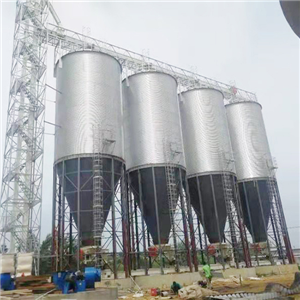
Hopper Bottom Silos are widely favored in grain storage for their efficient gravity-driven discharge capability, but the normal operation of their grain discharge mechanism is crucial to ensuring smooth storage workflows. When the grain discharge mechanism of a Hopper Bottom Silo gets stuck or stops, it is far more than a simple operational glitch—it triggers quadruple risks affecting safety, equipment integrity, grain quality, and production continuity, with potentially severe economic losses. Liaoning Qiushi Silo Equipment Engineering Co., Ltd., a leading manufacturer of Hopper Bottom Silos and supporting discharge systems, draws on years of industry experience to analyze the ten main causes of this issue, helping customers identify, prevent, and resolve discharge jams effectively.
A stuck or stopped grain discharge mechanism in Hopper Bottom Silos can directly lead to grain mold, overheating, and clumping due to prolonged stagnation. It also inflicts serious damage on the equipment itself, such as motor burnout from overloading, or deformation and breakage of discharge screws and impellers. Promptly identifying the root cause and implementing targeted repairs is essential to minimizing losses. Below, Liaoning Qiushi details the ten primary reasons for grain discharge mechanism jams or stoppages in Hopper Bottom Silos, categorized by frequency and type for easy reference.
Most Common Causes (Accounting for Over 80%)
1.Material Bridging/Arching
This is the most prevalent cause of discharge jams in Hopper Bottom Silos. When grain is damp, clumpy, or contains excessive impurities, it forms an arch-shaped blockage at the top of the conical hopper, suspending the material above the discharge port and cutting off the flow. Typical symptoms include the discharge motor running normally but little to no grain being discharged, along with fluctuating load on the reducer. Liaoning Qiushi notes that this issue is particularly common in areas with high humidity or when storing grain with inconsistent moisture content.
2. Foreign Objects Entering the Silo
Foreign objects such as burlap sacks, wire, bricks, woven bags, rope ends, and even maintenance tools often accidentally fall into Hopper Bottom Silos during loading or maintenance. These objects can directly jam key components of the grain discharge mechanism, including screw conveyors, augers, feed arms, and discharge impellers, causing an immediate stoppage. Liaoning Qiushi recommends strict material inspection and safety protocols during silo loading and maintenance to prevent this issue.
3. High Moisture Content, Mold, or Clumping of Material
Grain with high moisture content tends to adhere to the inner walls of Hopper Bottom Silos and the conical bottom, accumulating over time and significantly increasing the resistance of the grain discharge mechanism. In severe cases, this accumulation can completely block the discharge channel, rendering the mechanism inoperable. This issue not only causes jams but also accelerates grain mold and deterioration, further exacerbating losses.
Equipment-Related Problems
4. Deformation or Wear of the Discharge Screw/Feeding Arm
The discharge screw and feeding arm are core components of the grain discharge mechanism in Hopper Bottom Silos. Over long-term heavy-load operation, screw blades may become worn, thinned, or broken, resulting in insufficient thrust to convey grain. Additionally, bending of the conical bottom center post or feed teeth can cause scraping against the silo body, leading to jams. Liaoning Qiushi emphasizes regular inspection and replacement of worn components to extend the service life of the discharge mechanism.
5. Reducer/Motor Failure
The reducer and motor provide power for the grain discharge mechanism. Common failures include insufficient oil in the reducer, damaged bearings, worn gears, insufficient motor power, unstable voltage, thermal protection tripping, or inverter malfunction. These issues typically manifest as difficulty starting the mechanism, abnormal noise, stalling, or overload alarms. Liaoning Qiushi’s after-sales team regularly provides maintenance guidance to ensure the stable operation of these key power components.
6. Seals and Bearings: Grain and Dust Ingress
Shaft head seal failure in thegrain discharge mechanism allows grain particles and dust to enter the bearing chamber, leading to bearing seizing and immobilization. This not only causes the discharge mechanism to stop but also may result in irreversible damage to bearings and shafts. Liaoning Qiushi equips its Hopper Bottom Silos with high-quality seals to prevent grain and dust ingress, reducing the risk of this issue.
7. Poor Concentricity and Scraping
Misalignment between the grain discharge mechanism and the conical bottom of the Hopper Bottom Silo can cause the mechanism’s blades to scrape against the hopper plate. This creates significant resistance, leading to jams and accelerated wear of both the blades and the hopper. Precise installation is critical to avoiding this problem, which is why Liaoning Qiushi provides professional on-site installation services for all its silo systems.
Structural and Usage-Related Causes
8. Insufficient Cone Angle and Small Discharge Port
The conical angle of Hopper Bottom Silos directly affects material flow. An insufficient cone angle makes it easy for poorly flowing materials to accumulate at the bottom, leading to clogging. Similarly, a discharge port that is too small cannot accommodate the volume of grain being discharged, resulting in blockages. Liaoning Qiushi customizes the cone angle and discharge port size of its Hopper Bottom Silos based on the physical properties of the stored grain, minimizing this risk.
9. Localized Material Accumulation and Dead Zones
Dead zones often form near reinforcing ribs, support legs, and temperature measuring cables within the hopper of Hopper Bottom Silos. Grain accumulated in these dead zones over time hardens, eventually blocking the discharge channel and causing the grain discharge mechanism to jam. Liaoning Qiushi optimizes the internal structure of its silos during design to eliminate dead zones, ensuring uniform material flow.
10. Improper Discharge Sequence
Discharging grain only from the bottom of the Hopper Bottom Silo without using upper fluidization or arch-breaking aids can lead to increasing blockage over time. The upper grain exerts continuous pressure on the lower material, causing compaction and bridging. Liaoning Qiushi recommends using matching arch-breaking and fluidization systems, along with a scientific discharge sequence, to maintain smooth material flow.
Liaoning Qiushi: Comprehensive Solutions to Prevent Discharge Jams
Additionally, Liaoning Qiushi offers one-stop after-sales services, including regular maintenance inspections, component replacement, and on-site troubleshooting, helping customers quickly resolve any discharge-related issues. “The stable operation of the grain discharge mechanism is key to the value of Hopper Bottom Silos,” said a technical expert at Liaoning Qiushi. “We are committed to providing customers with reliable silo systems and professional guidance to avoid the losses caused by discharge jams.”