
The Best Hopper Bottom Silos Should Possess Six Key Characteristics
Hopper Bottom Silos have become an indispensable choice for bulk material storage in agriculture, grain processing, and industrial sectors, thanks to their unique conical bottom design that enables automatic, complete discharge. Unlike flat-bottom silos, Hopper Bottom Silos eliminate the need for manual or mechanical sweeping, significantly improving operational efficiency and reducing material waste. However, not all Hopper Bottom Silos deliver the same performance—only those with six core characteristics can truly meet the long-term storage needs of enterprises, ensuring stability, efficiency, and cost-effectiveness. Below, we detail the six key traits that define the best Hopper Bottom Silos.
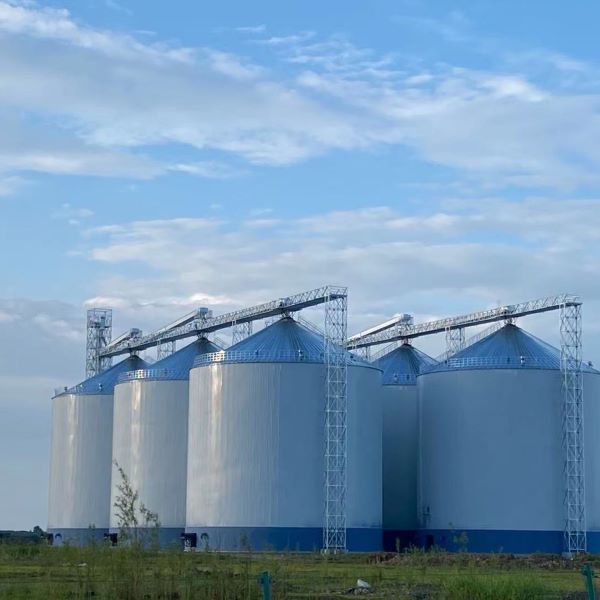
The superior performance of Hopper Bottom Silos lies in their rational design and high-quality construction, which directly determine their service life, discharge efficiency, and material protection capability. For enterprises investing in Hopper Bottom Silos, understanding these six key characteristics is crucial to selecting a product that aligns with their storage needs, avoids operational risks, and maximizes return on investment.
1. Optimized Hopper Angle for Complete, Unobstructed Discharge
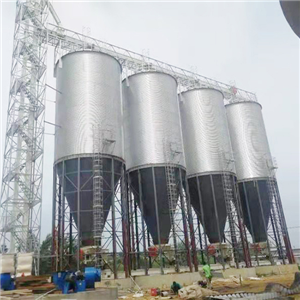
The core advantage of Hopper Bottom Silos is their automatic discharge capability, which relies entirely on a scientifically designed hopper angle. The best Hopper Bottom Silos feature an optimized hopper angle (typically between 45° and 60°), tailored to the physical properties of the stored materials—such as particle size, humidity, and fluidity. This angle ensures that materials slide smoothly by their own weight, eliminating dead zones and material residue, with a discharge completeness rate of over 99.5%. Poorly designed hopper angles can lead to material bridging, clogging, and incomplete discharge, undermining the core value of Hopper Bottom Silos and increasing operational costs.
2. Robust Structural Strength to Withstand Heavy Loads
Hopper Bottom Silos bear dual pressure from the vertical weight of bulk materials and the lateral pressure generated by the conical hopper design, so structural strength is non-negotiable. The best Hopper Bottom Silos are constructed with high-quality hot-dip galvanized steel sheets (thickness ranging from 2.0mm to 4.5mm), with reinforced design at the hopper-silo body connection—the most stress-prone area. Additionally, they adopt an equal-strength structural design, ensuring uniform force distribution across the entire silo body and hopper, enabling them to withstand long-term heavy loads and natural hazards (such as wind, snow, and earthquakes) without deformation or damage. This structural robustness extends the service life of Hopper Bottom Silos to over 30 years under normal maintenance.
3. Excellent Airtightness and Moisture Resistance
For Hopper Bottom Silos used to store grains, seeds, or other moisture-sensitive materials, airtightness and moisture resistance are critical to preserving material quality. The best Hopper Bottom Silos adopt a multi-layer sealing design, with high-quality waterproof gaskets and adhesive strips at all connections (including silo body joints, hopper connections, and manholes). The silo roof and hopper bottom are treated with enhanced waterproof coatings to prevent rainwater infiltration, ground moisture seepage, and air leakage. This airtight design not only avoids material mildew, rot, and insect infestation but also maintains the original properties of stored materials, ensuring that Hopper Bottom Silos can meet the strict storage requirements of food, feed, and pharmaceutical industries.
4. Corrosion Resistance for Long-Term Stable Operation
Hopper Bottom Silos are often used in outdoor environments or to store corrosive bulk materials (such as chemical raw materials, fertilizer, and salt), making corrosion resistance a key characteristic. The best Hopper Bottom Silos undergo strict anti-corrosion treatment: the entire silo body and hopper are hot-dip galvanized, forming a uniform, dense zinc layer that effectively isolates air, moisture, and corrosive substances. For harsh corrosive environments, additional anti-corrosion coatings can be applied to further enhance durability. This anti-corrosion design ensures that Hopper Bottom Silos can operate stably for a long time without rust, corrosion, or structural weakening, reducing maintenance costs and avoiding unplanned downtime.
5. Flexible Customization to Adapt to Diverse Needs
Different industries and enterprises have varying requirements forHopper Bottom Silos, such as storage capacity, material type, installation space, and discharge method. The best Hopper Bottom Silos offer flexible customization capabilities, allowing adjustments to silo height, diameter, hopper angle, and discharge system according to specific customer needs. For example, for small-scale farms, compact Hopper Bottom Silos (capacity 50-500 tons) can be customized; for large-scale grain depots or industrial plants, large-capacity Hopper Bottom Silos (capacity over 5,000 tons) with multiple discharge ports can be designed. Additionally, they can be seamlessly integrated with ventilation, monitoring, and feeding systems, making Hopper Bottom Silos highly adaptable to diverse storage scenarios.
6. Easy Maintenance and Low Operational Costs
The best Hopper Bottom Silos are designed with simplicity and practicality in mind, minimizing maintenance needs and operational costs. Their modular structure allows for easy installation and disassembly, and damaged components (such as seals, valves, or discharge pipelines) can be replaced quickly without affecting the entire silo system. The automatic discharge design reduces the need for manual operation, cutting labor costs significantly. Additionally, the robust construction and anti-corrosion treatment reduce maintenance frequency and replacement costs, ensuring that Hopper Bottom Silos deliver long-term value with minimal operational input.
Liaoning Qiushi Silo Equipment Engineering Co., Ltd., a leading manufacturer of Hopper Bottom Silos, integrates these six key characteristics into every product, focusing on R&D, customization, and quality control. The company’s Hopper Bottom Silos adopt advanced production technology and high-quality materials, with each unit undergoing strict load-bearing, airtightness, and corrosion resistance tests before leaving the factory. Additionally, Liaoning Qiushi provides one-stop services, including on-site measurement, customized design, installation commissioning, and after-sales maintenance, helping customers select and use Hopper Bottom Silos that best meet their needs.