
Conical Bottom or Flat Bottom Steel Plates? A Guide to Optimal Grain Silo Design
Steel grain silos are the cornerstone of modern grain storage, offering durability, large capacity, and cost-effectiveness for farms, grain depots, and processing plants worldwide. A critical decision in grain silo construction is choosing between conical bottom and flat bottom steel plates—a choice that directly impacts operational efficiency, grain quality, maintenance needs, and long-term cost-effectiveness. Both designs have unique advantages and limitations, and the optimal selection depends on specific grain storage requirements, including capacity, discharge needs, site conditions, and budget. Below, we conduct a comprehensive comparison of conical bottom and flat bottom steel plate grain silos to help enterprises make informed decisions.
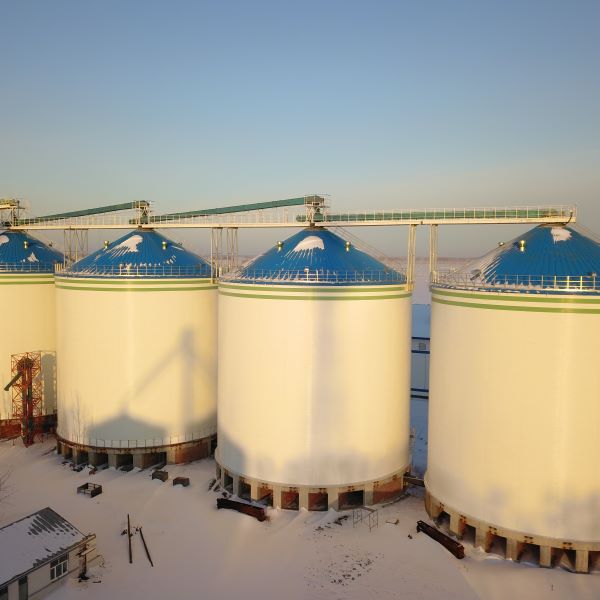
Grain storage demands focus on discharge efficiency, grain residue reduction, moisture control, and structural stability—factors that vary significantly between conical bottom and flat bottom steel plate silos. While conical bottom silos (also known as hopper bottom silos) excel in automatic discharge, flat bottom steel plates silos stand out in large-capacity storage and space utilization. Understanding their core differences is key to building a grain silo that aligns with practical operational needs.
Conical Bottom Steel Silos: Advantages and Ideal Applications for Grain Storage
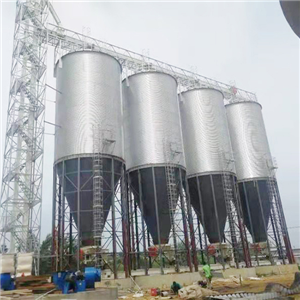
Conical bottom grain silos, constructed with sloped steel plates forming a conical base (typically 45° to 60°), are designed to leverage gravity for automatic grain discharge—their most significant advantage for grain storage. Unlike flat bottom silos, conical bottom silos eliminate the need for manual sweeping or mechanical discharge equipment to remove residual grain, reducing labor costs and minimizing grain waste, with a discharge completeness rate of over 99.5%.
For grain storage, this automatic discharge capability translates to faster, more efficient operation—critical during peak periods such as harvest or grain transportation. Conical bottom steel silos also reduce the risk of grain mildew and insect infestation, as their smooth, sloped steel plates leave no dead zones where grain can accumulate and retain moisture. Additionally, their compact design makes them suitable for small to medium-capacity grain storage (50 to 5,000 tons), ideal for family farms, small grain cooperatives, or processing plants with frequent, small-batch discharge needs.
However, conical bottom steel silos have limitations. Their conical structure requires more complex steel plate processing and reinforced construction at the bottom, increasing initial construction costs compared to flat bottom steel plate silos. Additionally, their vertical space requirement is higher, as the conical bottom adds height to the silo, which may be a constraint in areas with limited vertical space or strict height restrictions.
Flat Bottom Steel Plate Silos: Advantages and Ideal Applications for Grain Storage
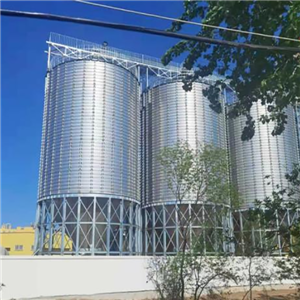
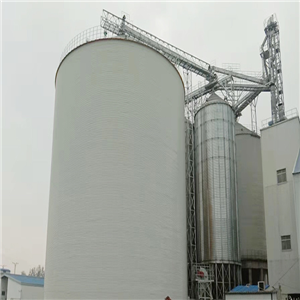
Flat bottom grain silos, featuring horizontal flat bottom steel plates as their base, are the preferred choice for large-capacity grain storage (5,000 tons and above). Their simple, modular design allows for easy expansion—multiple flat bottom silos can be connected side by side, maximizing land utilization, which is crucial for large grain depots, national grain reserves, and port grain terminals.
The use of flat bottom steel plates simplifies construction, reduces material consumption, and lowers initial investment costs—especially for large-capacity projects. Flat bottom steel plate silos also offer greater flexibility in grain storage types, capable of handling various grains (wheat, corn, rice, soybeans) and even powdery grain products (flour, bran) without the risk of bridging or clogging, which can occasionally occur in conical bottom silos with fine-grained materials.
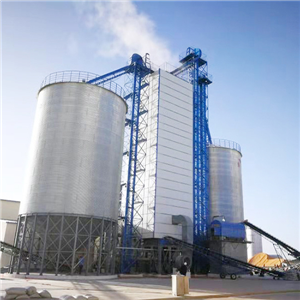
While flat bottom steel plate silos require auxiliary discharge equipment (such as screw conveyors or negative pressure discharge systems) to remove grain—adding some operational complexity and labor—this is a minor trade-off for large-scale operations. Modern flat bottom steel plate silos can be equipped with intelligent discharge systems to automate the process, reducing manual intervention and improving efficiency. Their stable horizontal base also provides better structural balance, making them more resistant to wind and seismic activity in large-capacity designs.
Key Factors to Consider When Choosing Between the Two Designs
4. Budget: Conical bottom silos have higher initial construction costs but lower operational and maintenance costs. Flat bottom steel plate silos have lower initial costs but may require additional investment in discharge equipment.
Liaoning Qiushi: Customized Grain Silo Solutions for Every Need
As a leading manufacturer of steel grain silos, Liaoning Qiushi Silo Equipment Engineering Co., Ltd. offers both conical bottom and flat bottom steel plate grain silo solutions, tailored to the specific grain storage needs of customers. The company’s conical bottom silos feature optimized steel plate slopes and reinforced construction, ensuring efficient automatic discharge and long-term durability. Its flat bottom steel plate silos adopt high-quality thickened steel plates, modular design, and intelligent discharge system integration, delivering reliable large-capacity storage.
Liaoning Qiushi provides one-stop services from on-site measurement and customized design to installation, commissioning, and after-sales maintenance, helping customers select the optimal bottom design based on their capacity, discharge needs, and site conditions. “There is no one-size-fits-all solution for grain silo bottom design,” said a technical expert at Liaoning Qiushi. “The best choice depends on practical operational needs, and we are committed to delivering solutions that balance efficiency, cost, and reliability.”