
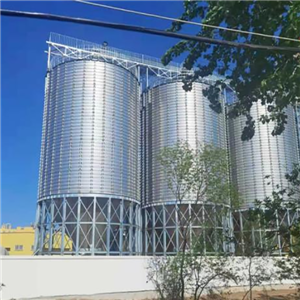
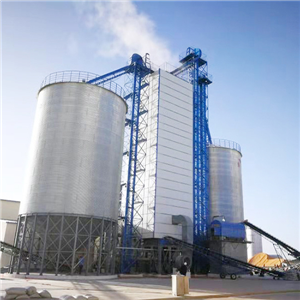
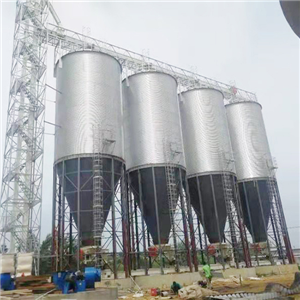
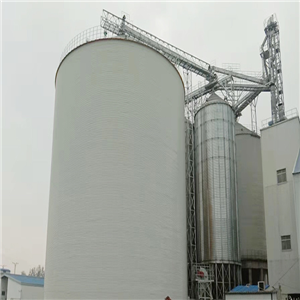
Spiral Storage Bunker Solves Long‑Standing Material Discharge Pain Points for Grain Processing Sites
Many grain elevators and feed processing plants are plagued by practical bottlenecks inherited from traditional silo structures. Dead storage zones inside cylindrical vessels, uneven grain output under low‑temperature conditions, and material damage during repeated handling frequently lead to capacity loss and unplanned downtime. In severe cases, operators can lose nearly 12% of usable storage volume due to stagnant material corners, while damp barley may block discharge outlets within only months of operation. The spiral storage bunker addresses these common failures through original structural optimisation rather than additional mechanical accessories.
The core advantage of a spiral storage bunker lies in its inner wall geometry. Instead of conventional straight vertical panels, steel spiral guides are fixed at 15‑22‑degree angles relative to the horizontal plane. During filling, bulk materials slide along these guides and form a natural central‑downward cone. When discharging, materials flow along the spiral path toward the centre instead of simple top‑to‑bottom movement. This pattern avoids blockages, material compaction and excessive pressure applied to the base. Field tests using 80 tons of proso millet at 14.7% moisture content achieved full discharge within 6 minutes and 42 seconds, without vibrators, auxiliary augers or manual cleaning work.
A spiral storage bunker delivers outstanding performance for fine, sticky or multi‑fraction materials, ranging from compound feed powder to sunflower seeds. Critical block‑prone positions including feeding hatches, rotary valves and outlet nozzles gain improved reliability. Wall pressure drops by 35‑40% compared with standard cylindrical silos of equal capacity, directly extending equipment service life. Properly manufactured units support up to 25‑year guaranteed service cycles under continuous daily operation.
Nevertheless, not all spiral storage bunker products offer equal performance. Three parameters determine real‑world outcomes: spiral pitch, guide plate thickness & profile, and fastening quality to the main frame. A 450 mm‑pitch spiral works well for grain yet causes leakage for pelleted compound feed. Thin 3 mm sheet guides deform easily under 18 tons per square‑metre loads, so reinforced S355JR U‑section profiles are adopted for heavy‑duty scenarios. Welding procedures also matter greatly: spot welding followed by seam finishing is required. Without this standard, temperature swings trigger micro‑cracks and progressive corrosion at connection joints.
Projects deployed in Kazakhstan and Belarus adopt dual anti‑corrosion protection: 275 g/m² zinc coating plus RAL 7035 epoxy finish. This configuration prevents local corrosion even when storing highly hygroscopic mineral fertilisers.
Practical value also comes from seamless integration into existing production workflows. A spiral storage bunker seldom operates independently and must match on‑site equipment. It can connect directly to single‑roller belt conveyors; the stable material outflow perfectly matches conveyor overload resistance. Compatibility with QS‑1200 grain dryer columns allows moisture‑meter signals to automatically regulate feeding speed and prevent material over‑accumulation. Existing cyclone dust collectors can link via DN600 flanged adapters fitted with EPDM gaskets, without full‑system reconstruction. Standard support frames enable direct mounting alongside QH‑40T hydraulic discharge platforms.
Available specifications cover volumes from 50 m³ to 1200 m³ with maximum height of 28 m. Rated working pressure reaches 120 kPa, and operating temperature ranges from −45 °C to +60 °C. Custom order lead time stands at 35 working days.
Reliable spiral storage bunker performance relies on both engineering calculation and accumulated field experience. Liaoning Qiushi Silo Equipment Engineering Co., Ltd does not merely supply finished hardware, but participates in commissioning work. At one elevator site in Rostov region, engineers adjusted spiral inclination by 2.3 degrees to counter local high‑humidity induced inner‑wall condensation. Such site‑specific adjustments cannot be fully captured in basic technical specifications and require on‑site diagnosis.
Every spiral storage bunker designed by the company is built as part of complete operational infrastructure, factoring in service access, upgrade potential and installation logistics. All components pass three‑stage inspection: incoming checks for steel and coatings, in‑process inspection for welding and assembly, and final pressure tightness testing at 1.5 times working pressure together with weld visual inspection.
For grain and feed operators, the spiral storage bunker represents a practical engineering answer to core operational puzzles: how to expand storage capacity, cut material losses and avoid production halts caused by frequent maintenance. Real‑world reliability comes from geometry, qualified steel and rigorous workmanship behind every welded joint.