
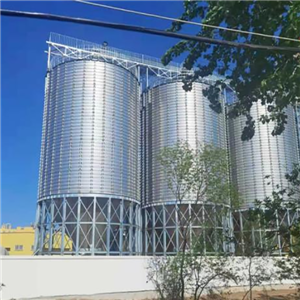
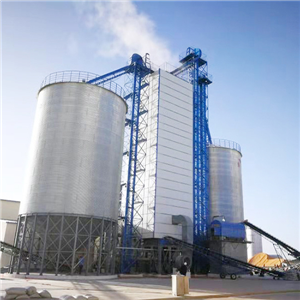
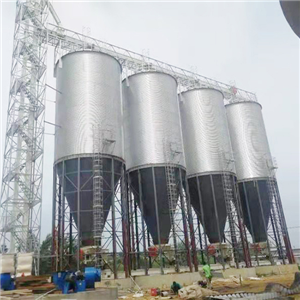
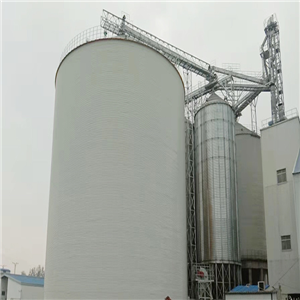
Non‑Insulated Steel Sheet Bunkers: Rational Engineering Choice for Grain Storage Projects
Many grain‑processing enterprises automatically add thermal insulation to every storage unit at the project design stage, treating insulation as an indispensable standard configuration. However, field operation data across Central Asia and CIS regions shows that non‑insulated steel sheet bunkers can deliver stable, long‑term performance under appropriate working conditions, without unnecessary extra investment in insulation materials.
It is not a simplified low‑cost workaround, but a well‑considered engineering solution oriented toward real‑world operating parameters. For dry grain with stable incoming moisture, and storage cycles limited to six months or less, extra thermal insulation brings barely measurable practical benefit, while pushing up capital expenditure and subsequent maintenance workload.
Of course, this solution has clear application boundaries. It is not suitable for high‑moisture grain over 14.5 % moisture content or high‑oil oilseed crops under sharp day‑night temperature swings. In these scenarios, surface condensation will trigger mould growth and material deterioration. Nevertheless, statistics show that for most feed mills and regional grain depots, incoming grain is processed by dryers to reach qualified moisture levels, and severe long‑term hot‑cold wall‑air alternation rarely occurs. In such mainstream scenarios, non‑insulated steel sheet bunkers perform reliably.
Liaoning Qiushi Silo Equipment Engineering Co., Ltd achieves dependable performance by optimizing structural design rather than relying on insulation layers. Every unit is calculated according to local meteorological parameters. Reinforced flange connections, double‑layer welding and thicker steel plates on the lower load‑bearing section jointly resist stress and potential condensation risks. The plant applies Z275 galvanized steel complying with GOST and European standards. Smooth inner surfaces avoid dust accumulation, which prevents self‑heating risk caused by tiny material residues. Every Lipp‑type bunker passes tightness testing under 150 Pa pressure, with formal test records provided for each project.
Project owners can obtain multiple tangible benefits from this solution. Installation cycles are shortened by 3‑5 days, as insulation framework laying, vapor barrier construction and outer cladding procedures are eliminated. Operating‑phase costs drop obviously: annual inspection and partial replacement of damaged insulation layers are no longer required. Local steel plate damage can be repaired within hours, without stripping large‑area covering structures. In addition, steel material meets local fire‑safety regulatory requirements, releasing no toxic fumes in case of fire.
Responsible suppliers will never sell generic off‑the‑shell products. For customers evaluating non‑insulated steel sheet bunkers, three sets of documents should be requested before procurement: tightness test report, galvanized material certificate and temperature‑stress calculation sheet in accordance with anti‑corrosion standards. Liaoning Qiushi Silo Equipment Engineering Co., Ltd generates customized calculation documents for every single project, taking installation height, diameter, feeding mode and local climate into full consideration. Technical support runs through the whole procedure, from capacity computation all the way to commissioning at site.
Selecting proper storage equipment does not mean stacking extra protective layers for safety margin. It means matching structural capability with actual working conditions. Rational engineering judgment helps grain operators cut redundant spending while keeping long‑term operational stability.