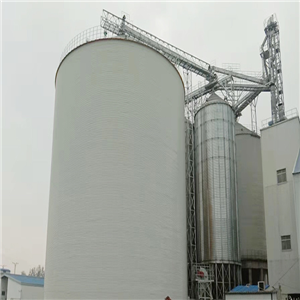
Why Negative Pressure Discharge is the Best Discharge Method for Flat-Bottom Steel Silos
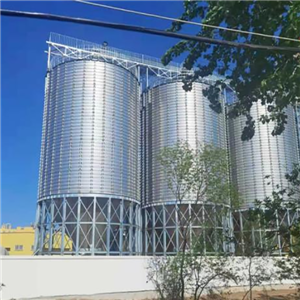
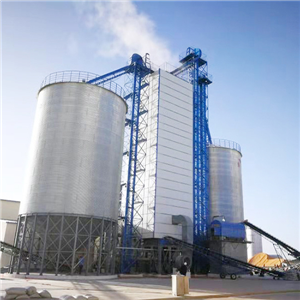
Flat-Bottom Steel Silos have become the backbone of bulk material storage across agriculture, industry, and logistics, thanks to their large capacity, structural stability, and long service life. For Flat-Bottom Steel Silos, the discharge method directly determines operational efficiency, material integrity, and long-term cost-effectiveness. Among all available discharge technologies, negative pressure discharge stands out as the optimal choice for Flat-Bottom Steel Silos, offering unmatched advantages that address the unique challenges of flat-bottom storage and elevate the overall performance of Flat-Bottom Steel Silos in real-world applications.
Unlike traditional discharge methods such as gravity or mechanical sweep, negative pressure discharge is specifically tailored to the horizontal floor design of Flat-Bottom Steel Silos, solving key pain points that have long plagued operators. Its ability to optimize storage utilization, protect material quality, ensure safety, adapt to diverse materials, and reduce operational costs makes it the ideal match for Flat-Bottom Steel Silos of all sizes, from small farm silos to large-scale industrial storage facilities.
Unmatched Storage Utilization for Flat-Bottom Steel Silos
A primary challenge with Flat-Bottom Steel Silos is material residue, which wastes valuable storage space and increases cleaning efforts. Negative pressure discharge uses powerful, uniform suction to extract materials from every corner of the Flat-Bottom Steel Silos’ floor, minimizing residue to less than 0.5%—a significant improvement over gravity discharge (which leaves residues in hard-to-reach corners) and mechanical sweep (which is time-consuming and incomplete). This ensures Flat-Bottom Steel Silos operate at full storage capacity, maximizing the return on investment for operators who rely onFlat-Bottom Steel Silos for bulk material storage.
Gentle Handling Protects Material Quality in Flat-Bottom Steel Silos
Many Flat-Bottom Steel Silos are used to store fragile materials such as grains, seeds, and processed feed, where quality degradation directly impacts value. Negative pressure discharge operates with low-speed, friction-free suction, avoiding the collision and extrusion common in mechanical discharge methods. This gentle handling preserves material integrity, prevents breakage and dust generation, and maintains the original properties of materials stored in Flat-Bottom Steel Silos. Additionally, its sealed design prevents external contaminants from entering Flat-Bottom Steel Silos, further safeguarding material purity—critical for food and feed applications.
Dust-Free Operation Enhances Safety Around Flat-Bottom Steel Silos
Dust pollution is a major safety and environmental risk during the discharge process of Flat-Bottom Steel Silos, especially when storing powdery or granular materials. Negative pressure discharge eliminates this risk by trapping dust within the discharge pipeline, creating a clean, dust-free work environment. This not only protects operator health but also reduces fire and explosion hazards in enclosed spaces around Flat-Bottom Steel Silos, ensuring compliance with global occupational health and environmental standards.
Versatility Adapts to Diverse Materials in Flat-Bottom Steel Silos
Flat-Bottom Steel Silos are renowned for their ability to store a wide range of bulk materials, from grains and feed to cement and coal—each with unique physical properties. Negative pressure discharge systems can be easily adjusted to accommodate different particle sizes, humidity levels, and fluidity, ensuring smooth, uninterrupted discharge without clogging. This versatility expands the application scope of Flat-Bottom Steel Silos, making them a flexible storage solution for multiple industries.
Low Maintenance & Energy Efficiency Reduce Costs for Flat-Bottom Steel Silos
Flat-Bottom Steel Silos are valued for their low maintenance needs, and negative pressure discharge further enhances this advantage. With a simple structure and minimal moving parts, negative pressure discharge systems require less frequent maintenance and replacement compared to mechanical discharge equipment. They also consume 20-30% less energy than positive pressure systems, leveraging atmospheric pressure to assist suction—translating to substantial long-term cost savings for operators of Flat-Bottom Steel Silos.
Liaoning Qiushi: Elevating Flat-Bottom Steel Silos with Negative Pressure Discharge
As a leading manufacturer of Flat-Bottom Steel Silos and supporting equipment, Liaoning Qiushi Silo Equipment Engineering Co., Ltd. integrates advanced negative pressure discharge technology into its Flat-Bottom Steel Silos solutions. The company’s customized systems are tailored to the structural characteristics of Flat-Bottom Steel Silos, featuring corrosion-resistant components, intelligent controls, and seamless integration with silo ventilation and monitoring systems.
From design and installation to after-sales support, Liaoning Qiushi provides one-stop services to ensure negative pressure discharge systems maximize the performance of Flat-Bottom Steel Silos for every customer. “Negative pressure discharge unlocks the full potential of Flat-Bottom Steel Silos,” said a technical expert at Liaoning Qiushi. “It’s the key to making Flat-Bottom Steel Silos more efficient, safe, and cost-effective for global storage needs.”