
Qiushi Highlights the Role of Grain Drying Towers in Modern Grain Storage Projects
Improving Grain Handling After Harvest
The harvest season brings a large amount of grain into storage facilities within a relatively short period.
Getting dried grain ready for long-term cold storage is part of the whole process most wheat farmers go through. Besides the drying tower helping them get rid of the extra moisture before the grain is stored, it can also serve a crucial function.Liaoning Qiushi Silo Equipment Engineering Co., Ltd. is a supplier of grain storage equipment and related machinery for agricultural and grain handling projects.
Along with steel silos, the company's product range includes the grain drying tower, grain conveying equipment, grain cleaning equipment, and hydraulic truck unloading platforms.The company believes that drying equipment should be considered together with the rest of the grain handling system. The capacity of a grain drying tower, for example, needs to match the amount of grain arriving at the facility. If drying capacity is too low, grain may have to wait during busy harvest periods. If the equipment is much larger than the actual requirement, the investment and operating costs may also increase.
Selecting a Grain Drying Tower for the Project
There is no single grain drying tower configuration suitable for every grain storage facility. Project requirements can vary according to grain type, incoming moisture content, expected throughput, fuel conditions, local climate, and the way grain is received and stored.
At Qiushi, these factors are discussed during the project planning stage. Customers can provide information about their expected grain volume, required drying capacity, site conditions, and storage arrangement. Based on these details, the grain drying tower can be considered as part of the overall equipment layout rather than as an isolated machine.For a grain storage facility located close to farms or grain collection points, the grain drying tower may need to handle large quantities of grain during the harvest period. In other facilities, grain arrives at a more regular rate throughout the year.The operating pattern can therefore have a direct influence on equipment selection.
Connecting Drying with Grain Storage
Drying is only one step in the movement of grain through a modern facility. After drying, grain normally needs to be conveyed to a silo or another storage location. This makes the relationship between the grain drying tower, elevators, conveyors, and storage silos particularly important.
A well-planned system can provide a clear route from truck unloading to cleaning, drying, conveying, and final storage. Qiushi can supply several of these equipment categories for grain storage projects, allowing customers to discuss the arrangement of the grain drying tower and related machinery during the same project planning process.
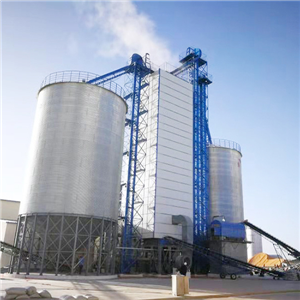
For example, grain may first arrive at a hydraulic truck unloading platform before being transferred by a bucket elevator or conveyor. Cleaning equipment can remove unwanted material before the grain enters the grain drying tower. Once drying is completed, conveyors can move the grain toward the selected steel silo.
The actual process depends on the customer's facility. Some projects may require additional cleaning before drying, while others may use a different material flow. This is why the position of the grain drying tower should be considered together with the receiving and storage equipment.
Practical Considerations for Drying Projects
The installation location of a grain drying tower is another point that deserves attention during planning. There needs to be sufficient space for equipment installation, grain transfer routes, inspection, and future maintenance.
The surrounding equipment also needs to be positioned carefully. Conveyors and elevators should have suitable connections with the grain drying tower, while operators should have reasonable access to the areas that require routine inspection.Local environmental and construction conditions may also affect the project.
Weather conditions, ground conditions, available utilities, site access, and local installation requirements are all worth checking before equipment goes into production.Qiushi discusses these points with customers during the preparation stage. Going through the details early allows the equipment layout to be checked and adjusted while there is still time to make changes. This can help avoid unnecessary modifications once the equipment has already arrived at the site.
Grain Drying and Long-Term Storage
A grain drying tower is used for more than simply reducing moisture content. The drying process also plays a role in preparing grain for storage and helping maintain its condition over a longer period.
Drying is closely related to what happens after the grain enters storage. Grain that is not brought to a suitable condition may create additional challenges during storage, particularly when it remains in a silo for an extended period.For this reason, the drying process and storage plan should be considered together. The required drying capacity, storage capacity, conveying speed, and expected grain turnover can all influence one another.
Qiushi's experience in steel silo engineering provides a useful connection between the grain drying tower and downstream storage equipment. A customer planning a new facility can discuss the drying system and silo arrangement at the same time, rather than making equipment decisions separately.
This approach can also make future operation easier to understand. Operators can see how grain will move from receiving equipment through the grain drying tower and eventually into storage.
Qiushi Supports Complete Grain Storage Equipment Planning
Liaoning Qiushi Silo Equipment Engineering Co., Ltd. focuses on the design, manufacturing, installation, and service of grain storage equipment. The company provides steel silos as well as equipment used for grain drying, cleaning, conveying, and truck unloading.
For customers considering a grain drying tower, the company can discuss project requirements such as grain type, expected capacity, site conditions, and the connection between drying and storage.
A modern grain facility depends on more than one machine. The grain drying tower, storage silo, conveyor, elevator, cleaner, and unloading equipment all have their own functions, but they also need to work together as part of the same process.
As grain storage projects continue to develop, practical equipment planning remains important. Qiushi will continue to provide grain storage equipment and project support for customers looking to improve the handling, drying, and storage of agricultural products.
Liaoning Qiushi Silo Equipment Engineering Co., Ltd.
Website: www.qssilo.com
Sales Email: sales@qssilo.com
For inquiries about a grain drying tower, steel silo, grain conveying equipment, or a complete grain storage project, customers are welcome to contact the Qiushi sales team.