
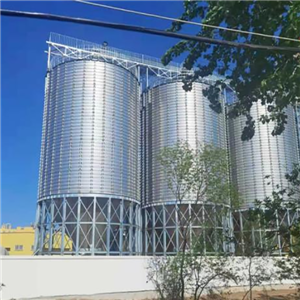
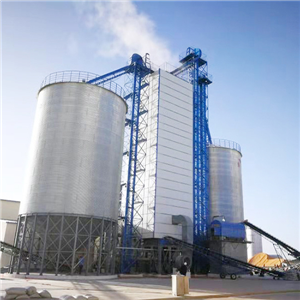
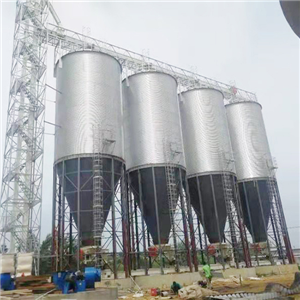
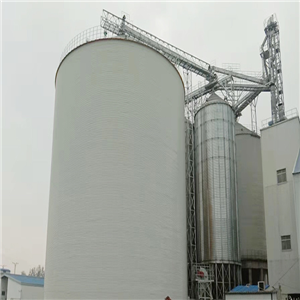
Insulated Steel Plate Silos Deliver Stable Grain Storage Under Extreme Fluctuating Temperatures
A professional insulated steel plate silo is far more than an ordinary storage vessel. It is an integrated engineering unit combining thermal insulation, airtight performance, mechanical stability and climate adaptability. Across the CIS region, especially territories featuring sharp temperature swings and high air humidity, insulated silos have gradually become standard facilities for grain depots, feed mills and grain elevators. Liaoning Qiushi Silo Equipment Engineering Co., Ltd. has specialized in the design and supply of such silo systems for 12 years. Practical project experience reveals that most customers make mistakes at the initial selection stage: many confuse “thermally insulated silos” with simply “lined silos”, and mix solid steel plates with corrugated sheeting. The technical gap between these concepts directly determines long-term operational reliability.
Solid Steel Plates: Superior to Concrete and Corrugated Sheets
Solid steel plates with thickness ranging from 2.5 mm to 4 mm form the core structure of reliable insulated silos. This structure withstands bulk material pressure up to 30 kPa, maintains geometric stability under cyclic loading, and eliminates the need for deep foundation construction. Concrete silos are prone to cracking under temperatures as low as -25°C. Corrugated silos gradually lose sealing performance after 3–4 operating seasons in the Ural and Siberian regions. In contrast, solid steel plates equipped with composite anti-corrosion treatment — hot-dip galvanizing plus polymer coating — achieve a service life exceeding 25 years with minimal maintenance.
The company adopts S355JO structural steel, which retains good ductility at -40°C and prevents microcracks during welding. Every steel plate undergoes incoming inspection for thickness and chemical composition via spectrometer testing. All technical parameters are strictly quantified without vague average indicators, laying a solid foundation for long-term anti-corrosion and structural safety.
Insulation Layer Selection: Not All Polyurethane Foam Solutions Are Suitable
An insulated steel plate silo adopts a typical sandwich structure: outer steel shell, thermal insulation layer and inner steel lining. However, insulation material selection directly decides the overall service cycle. Polyurethane foam (PUR) is widely used yet carries obvious defects. The material absorbs moisture easily. Once panel joints lose tightness, condensation accumulates inside, degrading foam performance and triggering hidden internal corrosion.
Liaoning Qiushi provides two targeted insulation schemes for different climates: 80–120 mm extruded polystyrene (XPS) for temperate zones, and 120 kg/m³ mineral wool matched with vapor barrier membranes for high-humidity regions with frequent freeze-thaw cycles. Both materials feature low water absorption, stable dimensions without settlement, and non-combustible properties. Thermal conductivity is controlled between 0.029 and 0.035 W/(m·K). This design supports stable operation with a temperature difference of up to 25°C between the silo interior and external environment, effectively suppressing internal condensation and grain sweating.
Three Typical Failures Leading to Early Silo Breakdown
The engineering team analysed 47 cases of premature insulated silo malfunctions over the past five years. 82% of failures stem from three avoidable construction and design errors:
Improper plate joint treatment: Without continuous double-sided welding and professional polyurethane sealant protection, cold bridges form inside seams. Condensation gathers and induces internal steel corrosion.
Missing ventilation clearance between insulation and inner lining: Insufficient vapour discharge creates a sealed heat retention effect, causing grain sweating even if grain moisture meets storage standards.
Omitted wind and snow load calculation during design: In Kazakhstan and southern Russia, standard snow load reaches 3.2 kPa. Silos without reinforced frames and rational column spacing deform severely within one operating season.
All structural parameters are individually calculated in accordance with Russian design codes SP 20.13330.2023 and GOST R 52178-2003, instead of applying universal template designs.
Professional Technical Support Outweighs Pure Price Competition
The quotation of insulated steel plate silos depends on more than capacity and steel thickness. Customised pricing considers on-site conditions: feeding height, transportation modes including road and railway, continuous or intermittent operation schedules, dust suppression configuration and explosion protection standards. Liaoning Qiushi does not supply standardized off-the-shelf silos, but delivers complete system solutions, including detailed construction drawings, complete spare parts, connection schemes for cyclone dust collectors and pulse filters, and foundation suggestions for low-bearing-capacity soil.
3D models, heat loss calculation tables and preliminary cost calculators are available via official channels, yet final technical proposals are confirmed only after receiving geological survey data and formal technical specifications. This customised design mode reduces renovation risks during grain elevator upgrades by 68%. Clients from Belarus and Kyrgyzstan confirm that professional engineering support in the design phase can shorten on-site assembly cycles by 2–4 weeks.
An insulated steel plate silo is never a simple trade-off between procurement cost and durability. It represents long-term investment in stable grain storage, predictable production cycles and reduced grain losses. Such equipment reliably operates under harsh working conditions: -35°C low temperature, 95% relative humidity, and daily throughput of 500 tons. Successful projects always start with full operating condition evaluation rather than preliminary budget estimation. Only in this way can thermal insulation serve as reliable protection instead of becoming a hidden source of equipment failure.