
Grain Storage Industry Faces New Priorities as Harvest Logistics Become More Demanding
The grain storagery is confronting the fact that requirements are changing as more and more grain production takes place in a coordinated and organized agricultural context besides the operations of grain processing also scaling-up.For many storage facilities, the challenge is no longer simply having enough space. Operators are also paying closer attention to how quickly grain can be received, handled, stored, monitored, and moved out of the facility.
During the harvest season, large amounts of grain may arrive within a relatively short period. If receiving and conveying equipment cannot keep up, trucks may have to wait and storage operations can become less efficient. This has made the connection between storage capacity and grain handling equipment an increasingly important part of facility planning.
Storage Capacity Is Only One Part of the Project
A larger silo does not necessarily mean a more efficient storage facility. The actual requirements depend on the type of grain, expected incoming volume, storage period, site conditions, and the way grain moves through the facility.
For example, a grain purchasing station may need to deal with a high volume of incoming grain during harvest. A feed mill or processing plant may have different requirements, with greater attention given to regular material turnover and coordination between storage and production.
Because of these differences, storage projects are increasingly planned around the complete grain handling process rather than the silo alone.
Faster Grain Handling Requires Better Coordination
Receiving, conveying, cleaning, drying, storage, and discharge are closely connected. A delay in one part of the system can affect the operation of the other equipment.
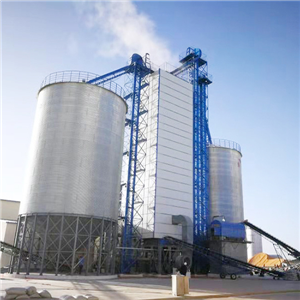
For this reason, project planning often considers equipment capacity and operating sequence at the same time as silo selection. Conveyors, grain cleaners, drying equipment, dust collection systems, ventilation equipment, temperature monitoring, and electrical controls may all form part of the overall system.
The exact equipment arrangement depends on the customer's process and the conditions of each project.
Storage Conditions Remain Important
Handling speed is only one consideration. Once grain enters storage, maintaining suitable conditions becomes important for long-term storage.Ventilation and temperature monitoring can help operators keep track of changes inside the silo.Good moisture management is one of the keys to successful storage and it also helps in proper sealing that protects the grains.We also must pay close attention to where the warehouse or storage facility is built.
The type of climate and its changes can really affect the quality of stored grains.Proper moisture management and sealing, especially in areas where climate conditions can pose additional problems for the storage of grain, are also very important. Such requirements can often be dealt with more simply and efficiently if you keep them in mind during the early design stage instead of tacking them on after the building has already gone up.
Different Facilities Need Different Solutions
No one-size-fits-all storage arrangement exists for every agricultural operation.A farm, grain purchasing station, feed production facility, processing plant, and large agricultural storage project can have very different operating patterns.
Storage capacity, silo arrangement, conveying routes, equipment selection, and future expansion plans therefore need to be considered according to the actual use of the facility.
For equipment suppliers and engineering contractors, understanding these differences is becoming an important part of providing practical storage solutions.
Looking Ahead
As grain handling facilities continue to develop, project planning is likely to place more emphasis on the complete operating process. Storage capacity remains important, but receiving speed, equipment coordination, monitoring, maintenance, and long-term operating costs are also becoming part of the discussion.
For customers planning a new grain storage facility, reviewing the entire process at an early stage can help avoid problems later and make better use of the available site and equipment.
About Liaoning Qiushi
Liaoning Qiushi Silo Equipment Engineering Co., Ltd. provides steel silo solutions and related grain handling equipment for different agricultural and industrial applications. The company works with customers according to their storage requirements, site conditions, grain handling processes, and project scope.
Company: Liaoning Qiushi Silo Equipment Engineering Co., Ltd.
Website: www.qssilo.com
Sales Email: sales@qssilo.com