
Booming Global Grain Trade Drives Upgrade in Cross-Border Warehousing & Logistics: Industry Leaders Pave the Way
SHENYANG, China – As global grain trade volume is projected to reach 460 million tons by 2025, driven by increasing demand for food security and cross-regional agricultural cooperation, the cross-border grain warehousing and logistics sector is undergoing a critical transformation. The traditional storage and transportation model, plagued by inefficiency, poor adaptability to extreme climates, and disjointed logistics links, can no longer meet the needs of modern large-scale grain trade. Industry leaders, represented by Liaoning Qiushi Silo Equipment Engineering Co., Ltd., are stepping up with innovative steel silo solutions and integrated logistics designs to reshape the efficiency and reliability of cross-border grain storage and transportation.
According to a latest report from the Food and Agriculture Organization (FAO), cross-border grain trade faces significant challenges in the storage and logistics link, with an average loss rate of 8-12% during transportation and storage, primarily due to inadequate storage facilities and inefficient loading/unloading processes. This issue is particularly prominent in border regions with complex climates and inconvenient transportation, such as Central Asia, Southeast Asia, and other major grain trade corridors. “The upgrade of cross-border grain warehousing and logistics is not only a need for enterprise development but also a key link in ensuring global food security,” said an industry analyst from the International Grain Council. “Regions that serve as trade hubs urgently need high-quality storage facilities that can adapt to local conditions and integrate with cross-border logistics systems.”
Xinjiang, China, as a core gateway connecting the domestic grain market with Central Asia, has become a focal point for the upgrading of cross-border grain warehousing and logistics. With the continuous advancement of the Belt and Road Initiative, the volume of grain trade between China and Central Asian countries through Xinjiang has increased by 23% annually over the past five years. However, the harsh local climate – characterized by arid, sandy, and strong windy conditions – and the lack of large-capacity, weather-resistant storage facilities have long restricted the development of cross-border grain trade in the region
To address these industry pain points, enterprises in the silo equipment sector are focusing on technological innovation and customized solutions. Liaoning Qiushi, a leading player in the industry, has developed a series of high-performance steel silo systems tailored for cross-border grain trade scenarios. These systems integrate wind-resistant, corrosion-proof, and intelligent monitoring functions, and are matched with efficient automated loading and unloading equipment to form a one-stop cross-border grain storage and logistics solution. “The core of serving cross-border grain trade is to balance three key elements: climate adaptability, storage capacity, and logistics efficiency,” said Mr. Wang Tao, Sales Director of Liaoning Qiushi. “Our solutions are designed to address the unique challenges of different border regions, ensuring that grain quality is preserved and trade flows smoothly.”
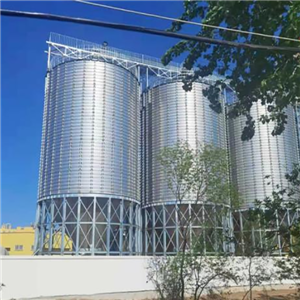
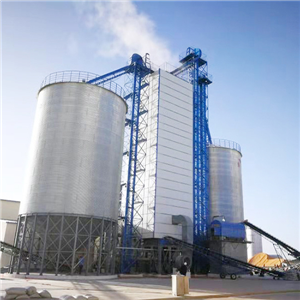
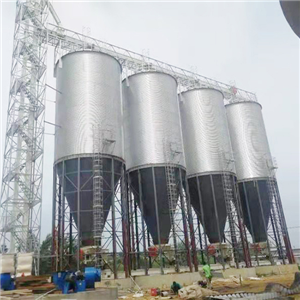
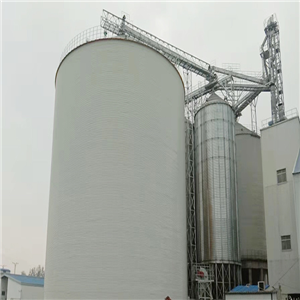
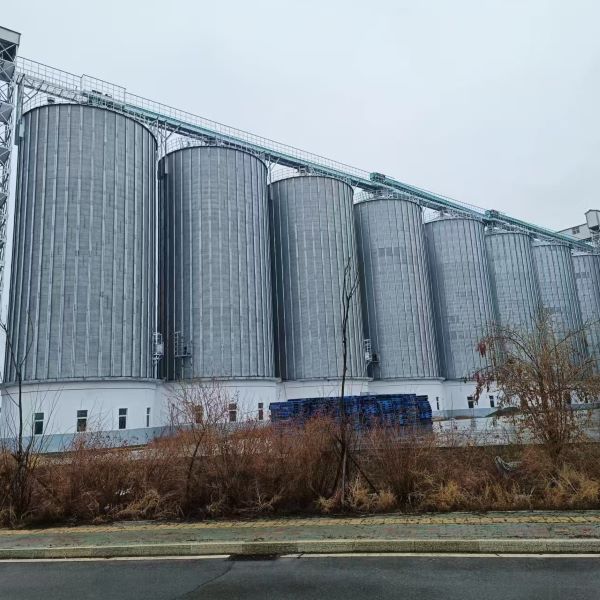
A typical case is the recently completed 50,000-ton steel silo project for Xinjiang Keming Import and Export Trading Co., Ltd. Liaoning Qiushi customized 3 units of 10,000-ton and 8 units of 2,500-ton steel silos for the company, integrating double-layer anti-corrosion coatings and enhanced spiral edge-biting structures to resist 12-level strong winds and sandy weather in Xinjiang. The supporting automated loading and unloading system, with a loading capacity of 500 tons per hour, connects seamlessly with the logistics yard and customs inspection area, improving the overall efficiency of cross-border grain trade by 40%. This project not only solves the storage dilemma of Xinjiang Keming but also sets a benchmark for cross-border grain warehousing upgrades in the region.
Beyond climate adaptation and efficiency improvement, intelligentization has become another key trend in the upgrade of cross-border grain warehousing. Advanced silo systems are now equipped with IoT-based monitoring equipment that tracks temperature, humidity, and grain moisture in real time, transmitting data to a central control system for remote management. This ensures that grain quality is monitored throughout the storage period, meeting the strict quality standards of international grain trade. “Intelligent monitoring has become a basic requirement for cross-border grain storage,” said Mr. Zhang Hui, Quality Director of Xinjiang Keming. “It provides a reliable quality guarantee for our grain exports to Central Asian markets.”
The upgrade of cross-border grain warehousing and logistics is also driving industry collaboration. Silo equipment manufacturers, logistics companies, and customs authorities are strengthening cooperation to build integrated service platforms. These platforms cover the entire process from grain storage, loading/unloading, to customs clearance, realizing information sharing and process synergy. In Xinjiang, such collaborative efforts have reduced the cross-border grain trade cycle by an average of 3-5 days, significantly enhancing the competitiveness of Chinese grain in the international market.
Looking ahead, with the continuous growth of global grain trade, the demand for high-quality cross-border warehousing and logistics solutions will further surge. Industry experts predict that the global market size of cross-border grain storage equipment will exceed $8 billion by 2030, with technological innovation and regional customization becoming the main competition points. “We will continue to invest in R&D to launch more targeted solutions for different cross-border trade corridors,” added Mr. Wang Tao. “By working with industry partners, we aim to contribute to the efficient and stable development of global grain trade.”
For more information about cross-border grain storage solutions, visit www.qssilo.com or contact the sales team at sales@qssilo.com.
grain warehousinggrain warehousinggrain warehousinggrain warehousinggrain warehousinggrain warehousinggrain warehousinggrain warehousinggrain warehousinggrain warehousing