
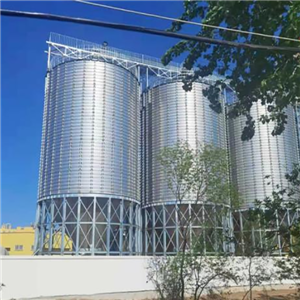
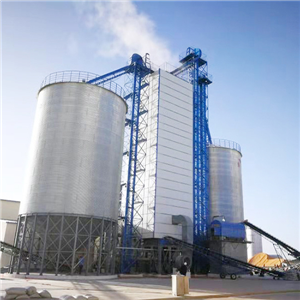
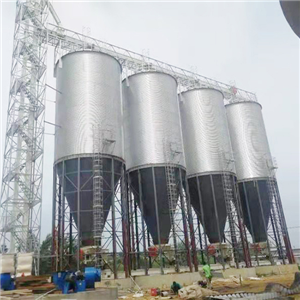
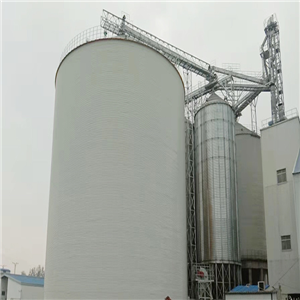
Prefabricated Galvanized Steel Silos Deliver Predictable 15-Year Service Life for CIS Grain Storage Projects
A professional prefabricated galvanized steel silo is far more than a simple storage container. It is a complete engineered solution capable of reliable 15-year continuous operation, enduring frigid Russian winters, humid climates in the Russian Far East, and heavy dust loads at southern grain elevators. Liaoning Qiushi Silo Equipment Engineering Co., Ltd. has specialized in designing such silo structures since 2012. Years of field experience demonstrate that hot-dip galvanization effectively prevents corrosion under proper conditions, yet satisfactory performance cannot be achieved without standardized installation and targeted internal coating treatment. The company focuses exclusively on raw grain and feed raw material storage and does not provide storage solutions for industrial powder materials.
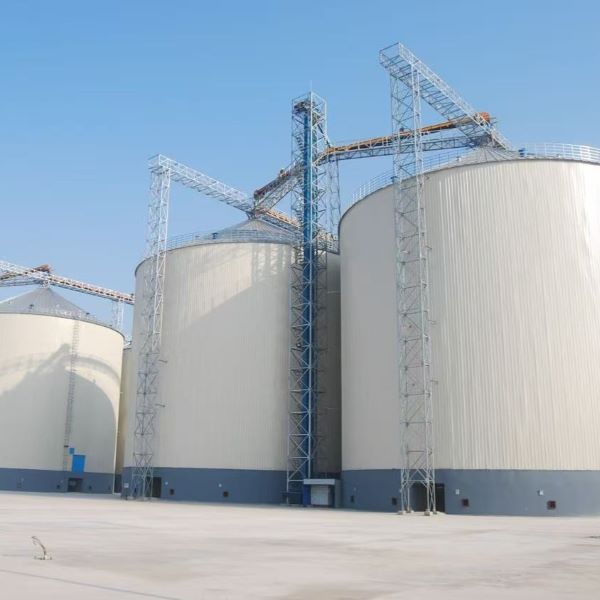
Why Choose Prefabricated Galvanized Steel Silos
This type of silo strikes a balanced combination of fast assembly speed, favorable total ownership cost and long service lifespan. Welded silos require skilled welders to carry out complex on-site operations, while monolithic concrete silos demand up to three months for pouring and curing. In contrast, a prefabricated galvanized steel silo can be fully erected within 3 to 7 days. All components are delivered with precise marking, bolt connections follow unified standards, and the structure adapts to lightweight slab or pile foundation schemes.
Multi-layer metal protection constitutes the core advantage. The hot-dip galvanized layer reaches a coating weight of 275 g/m², providing cathodic protection for steel substrates. Even if scratches appear on the surface, zinc will corrode preferentially to avoid rust spreading on the base steel. For high-humidity and corrosive regions, the company adds an extra epoxy coating on the silo interior. This barrier separates grain materials from direct contact with steel plates and greatly lowers condensation risks inside the silo.
Thin 1.2 mm steel sheets are never adopted for production, as they deform easily under grain pressure. Standard silo walls feature 2.0 mm plates for the lower load-bearing ring and 1.6 mm plates for upper sections. This thickness configuration withstands grain pressure for silos up to 12 meters high without permanent deflection or vibration deformation.
Common Equipment Failures and Targeted Preventive Measures
Many operators encounter silo leakage only two years after commissioning. The root causes rarely lie in galvanization quality, but three typical construction mistakes: poor sealing of joints, insufficient drainage under the base, and neglect of thermal expansion gaps during assembly.
Joint sealing: Rivets and bolts must be fitted with EPDM gaskets. Ordinary flat washers cannot maintain long-term tightness; metal components expand and contract with temperature changes, squeezing simple washers and allowing moisture to seep through threads.
Foundation design: Waterproof membranes and perimeter drainage systems are mandatory. Without such facilities, moisture accumulates beneath the silo base and triggers localized corrosion.
Thermal expansion gaps: When installation proceeds at temperatures as low as -25°C, 0.8 mm expansion clearance is reserved per meter of silo circumference. Uniform expansion during temperature rise avoids concentrated stress on fasteners.
All above solutions are confirmed with clients in technical specifications before production. The company rejects universal standardized designs. Silos built for feed mills in Kazakhstan differ from wheat storage silos deployed in Belarus, not only in dimensions, but also in hopper inclination angle, discharge gate type and aeration system layout.
Select Silos Based on Operational Requirements, Not Catalog Parameters
A prefabricated galvanized steel silo is an integrated system instead of an isolated metal tank. It integrates maintenance hatches, level sensors, ventilation pipelines and connecting interfaces for conveyors. Every project starts with analysis of four core indicators:
Stored material characteristics: Different raw grains determine the natural repose angle and requirements for anti-static lining;
Loading and unloading cycle: Discharge frequency guides the selection of slide gates, rotary valves or airlock devices;
Local climate conditions: Regions with temperature fluctuations exceeding 60°C require enhanced thermal insulation and expansion compensators;
Compatibility with existing production lines: Engineers adjust flange positions, installation heights and outlet layouts to match on-site conveyors and weighing equipment.
As a practical reference, a double-hopper silo was customized for a grain elevator in Rostov Oblast. The upper hopper realizes preliminary dust settlement, and the lower hopper adopts a 65° inclination angle to prevent wet wheat adhesion. This design cut downtime for silo cleaning by 40%.
Reliability Originates from Systematic Quality Control
A 10-year structural warranty is not merely a commercial promise, but the outcome of strict internal inspection procedures. At Liaoning Qiushi’s manufacturing base in Liaoning Province, every steel plate undergoes three rounds of inspection: incoming detection of thickness and galvanized coating quality, intermediate inspection after bending and drilling, and final air tightness testing under 0.05 bar pressure after assembly. Components with bending radius deviation exceeding ±0.3 mm are rejected before shipment.
Liaoning Qiushi Silo Equipment Engineering Co., Ltd. supplies grain storage equipment to Russia, Kazakhstan, Uzbekistan and Armenia. Services extend far beyond container delivery. The engineering team coordinates the whole installation process, supplies 3D models for general contractor review, provides video training for local assembly crews, and carries out commissioning work including joint pressure testing and full sensor function verification.